


At Brunswick High School (BHS), the theater department is a vital part of the student body. This school year, BHStage has performed the fall play, The Somewhat True Tale of Robin Hood. As of now, they are in the rehearsal process of the spring musical, Seussical.
The cast, crew, and pit are working hard to put everything together for a performance to remember on April 23, 24, and 25. Seussical is a very technically planned production so for this show specifically, they are working toward making sets fit the wild and eccentric aesthetic of Dr. Seuss stories as well as making sets functional to be changed and used by actors.
Behind the scenes, Stage Manager Vivian Frederick is responsible for all technical elements of the musicals and plays at BHS until she graduates. Lyndsey Peterson, Ms. P, the director and Margaret Clugston, the assistant director oversee the productions.
There are also other major jobs that bring value to every show. Costume Designer, Run Crew, Stagehand, Lighting Crew, Sound Crew, and other important jobs are required to run a successful production here at BHS. With insight into the jobs of technical theater, Brunswick can successfully appreciate the behind the scenes work of every show.
Stage Manager:
Vivian Frederick is a junior this year at BHS. She is the Stage Manager for the plays and musicals following last year, being Assistant Stage Manager to Teagan Swyers. Next school year, she will be doing her second year in this position.
“My key responsibilities from the rehearsal process to the opening night are doing attendance and ensuring that everyone is at the rehearsal they’re meant to be at,” Frederick said. “I take important notes during rehearsals, making sure both rehearsals and shows run smoothly.”
Frederick is not only responsible for overseeing attendance and creating notes for future rehearsals, but she also holds the tricky task of handling conflicts in the middle of performances.
“I handle unexpected changes or mishaps during a live performance by first, figuring out what went wrong and who or what was involved in it,” Frederick said. “I then tell Ms. Peterson or Ms. Clugston about it and communicate with them any potential solutions if needed or I just tell whoever alerted me of the problem the solution, which was figured out previously.”
Aside from the rises and falls of being a BHS Stage Manager, Frederick believes that theater is valuable when it is seen from all perspectives; from the technical side and the acting side.
“Stage Managing has influenced my perspective on live theater because it allows me to see all sides of the shows; both the acting and the tech side, as I go to all rehearsals and witness most of the show process,” Frederick said.
Frederick has spent a lot of time working towards her position as Stage Manager and has taken many valuable lessons and experiences from doing so. Having such an important role in the process of putting on a show can be rewarding.
“What I find most rewarding about my work is getting to build connections with many different people and being able to be a part of all the different aspects of the show and being able to watch it develop,” Frederick said.
Costume Crew:
The Costume Crew is a key aspect of the creativity in live theater. They handle everything from designing costumes, fitting them, maintaining clothing, and handling quick changes backstage. Rhylee Nealey, a sophomore at BHS, is one of three costume designers for the spring show, Seussical and really enjoys her part in the production.
“Some of the key responsibilities are making sure everyone’s costumes are accounted for and making sure that everyone is comfortable and able to perform in their costumes,” Nealy said. “I also try to resolve any issues or malfunctions that may happen with a costume.”
Costumes are an important visual for character expression, scenery, storytelling, and other elements. Creating a costume comes from a very thoughtful process where character analysis, setting, and theme are considered. Nealey highly considers this in her work.
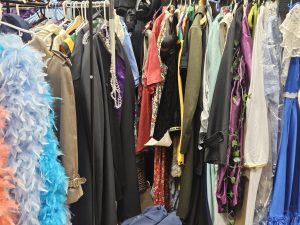
“Costumes show emotion and growth in characters as they go through the story of the show,” Nealy said. “Costumes are a great way to tell if something is happening to the character or changes that are in a scene or character.”
Character analysis and understanding of the plot of the show is a must in the design process. But real life actors also are considered when making, handling and transporting a costume.
“We try to make everyone comfortable and use materials and techniques everyone is comfortable with, especially doing quick changes when communicating with the actor is key to pulling it off,” Nealey said.
A creative art form, costume designing can bring out personal success within a person.
“My favorite project that I’ve done is the tails from Seussical for Mayzie and Gertrude,” Nealy said. “They really express the character and are really fun to make.”
Run Crew:
Maty Sautter, a sophomore at BHS, is one of the many students with the role of the Run Crew. This title is for the technicians who are backstage and execute all live performance operations, such as scene changes.
“Coordinating scene and set changes is pretty easy as long as we communicate,” Sautter said. “Everyone has a place and every place has a job.”
Backstage, the entire run through works together on the same operations. But to organize their safety and time management, they must work together to plan their strategy. The Run Crew must implement heavy safety measures. They only get a matter of time to transport sets, props, and change other scenery, before the lights come on.
“I don’t tend to move the heavy sets around, but when I do it’s always with a partner,” Sautter said. “When it comes to heavy or complex set pieces, wooden frames really come in handy. It’s kind of like building a skeleton.”
A lot goes on in the time that a scene change occurs. When the lights go down, the skilled Run Crew uses strategic planning to get things removed from the stage and put onto it at the same exact time. Sautter explained that there are usually only 5-10 seconds with each set change, calling for high pressure moments for some crew members.
“I’ve never been in a high pressure moment, really,” Sautter said. “I’ve always felt pretty easygoing backstage. On scenes that are stressful, though, I just keep in mind that the audience doesn’t know how the show is supposed to run. There’s always wiggle room.”
Winghead:
Christian Martinez, a junior at BHS, is the Stage Left Winghead for the performances produced by the drama department. He is also in close connection with Stage Manager Vivian Frederick because not only is he a Winghead, but he is also the Assistant Stage Manager for the production of Seussical. As a Winghead, Martinez takes on high responsibility.
“Preparing a wing for show day starts by making sure all set pieces and props are where they need to be,” Martinez said. “As well as making sure nothing is damaged to ensure the show goes as smoothly as possible.”
Martinez also must supervise backstage to communicate to the Stage Manager and other technical roles, any changes or needs that are to be tended to during the show.
“We use walkie talkies to communicate across the stage and to the back of the house,” Martinez said. “Any other communication is handled within our areas.”
It takes a hardworking person and a person with leadership skills to take on the role of a Winghead. They are highly relied on during the show process so communication is key.
“A Winghead needs to be able to stay calm under pressure and be willing to handle any problems that arise. They need to be responsible, focused, communicative, straightforward, and have leadership skills,” Martinez said.
Sound Crew:
Not necessarily behind the curtain, but still in the technical field, Haze Jeffrey is one of two students with the role of the Sound Crew. Seussical is their second musical here at BHS operating sound. Haze explains that their introduction to sound was not quite what they expected.
“It’s sort of a funny story, Jeffrey said. “I really only got into sound because last year, it was two seniors, so someone had to figure it out.”
Jumping onto the task so quickly requires patience and perseverance. Haze still stands by that during every show because there are plenty of things that could go wrong. With that being said, preparation is required to ensure limited issues in the sound department.
“Before a show, the first thing me and Gabby [the other person on sound crew] do is go up to the sound booth and turn everything on; the general power and receivers,” Jeffrey said. “Then we make sure all the mic packs have fresh batteries. We turn the sound board on [who is named Marc] and finally get all the mics to their actors. Then, we do a sound check to ensure that all mics are working properly and sound good.”
The most common issue, according to Jeffrey, is that there have been bad mics. Adjusting mic position, adjusting frequencies, and other factors like pitch and gate might need adjusted to make sure everything sounds smooth. Most of this can fortunately be done from the sound board. Oftentimes, handling conflicts could call for collaboration between actors and other tech crews.
“We work closely with lights and management since we share the back of the house,” Jeffrey said. “Sound also indirectly works with the whole Run Crew since we occasionally will cover a black out or scene transition with music. We also have to work with costumes to make sure an actor is comfortable with the mic position and so that the mic will work no matter what they wear.”
Lighting Crew:
Not too far from the sound equipment, resides the Lighting Crew or in other words, “Lights”. Aley Peluso, a junior at BHS has been operating the light board to prepare for BHS’s spring musical, Seussical. She has to be very familiar with the equipment she uses.
“I use the light board, the Cognito 2, and I use it by programming the circuits that we use for each set and that corresponds to lights and the lights come on when you hit the cue,” Peluso said.
In order to properly coordinate lighting decisions, Peluso has to understand the general consensus of each scene in the musical. From there, she must collaborate with the director and experiment with the lights to find the perfect scene transitions and light for a scene.
“I work with the director, Ms. P,” Peluso said. “She’ll usually tell me what needs to happen in the scene. So then I’ll be like ‘let me put on these lights,’ and I’ll see if we should have certain levels of intensity on it, or bring down the intensity or make it bright.”
Peluso doesn’t just take note of the director’s choices, but she also must take on certain aspects by herself, especially during showtime. Skills and an alert mind come in handy for the Lighting Crew.
“You really have to pay attention during it because a lot of the cues happen on actor lines,” Peluso said. “It’s really just paying attention and making sure you bring up the lights at the right time.”
Props Crew:
Backstage, alongside the Run Crew, resides another branch of tech. The Props Crew also is a high demand job in technical theater that collaborates with various other crews. Ellie Nielson, a sophomore at BHS, is responsible for the handling and creating of props.
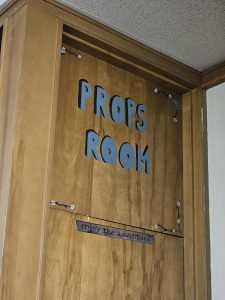
“I have a list of all the pros we need and I made lists on my phone so it’s easy to access,” Nielson said. “Especially for run throughs and performances, at the top of the show I’ll go through the list and make sure they’re all in the right places. I have it on the list where they need to be. I have which side of the stage certain things need to go to. Before run-throughs, once props are made, I’ll put them all in the same bin in the props closet to make sure it’s all gathered together.”
A props department must be careful of certain props that are sensitive to certain conditions. Sometimes props may be heavy, complex, or sometimes even consumable.
“I haven’t really had any dangerous props,” Nielson said. “I will say we had some food props, like grapes last year so we had to bring out new grapes every day because we didn’t want them to be moldy and covered in mice poop or something. I guess that’d be food safety. I think the one safety concern is when making them, we use hot glue pretty often.”
Doing Props Crew requires lots of responsibility to keep track of various props whether they’re to be part of sets or if they’re for multiple actors. Keeping an eye on every prop from the beginning and end of the show is essential because if one thing is missing, many others could be in their wrong locations too.
“Honestly, just be willing to listen to what the director wants you to do so that it’s not all, ‘oh but I had this cool idea, it’s all about me, me, me,’ but instead being willing and open to what you’re supposed to do,” Nielson said. “It’s also good to try your best to be organized and have a good sense of timing.”
The Importance of Technical Theater:
Technical theater is crucial to every production because without it, audiences would not be able to immerse themselves in the artistic realism that technical theater works to present. Depth that is only presented in a tech heavy production is what sets the scene for storytelling and symbolism. Thanks to the skills in the technical department, live performance at BHS enriches the experience of what theater is all about.