

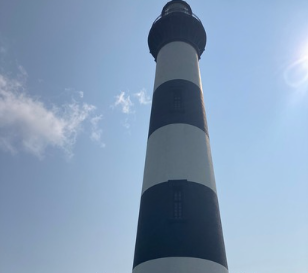
Just south of Nags Head North Carolina, you will find the only lighthouse located in northern Dare County. The current Bodie Island Lighthouse which was erected in 1872, is the only lighthouse in the Cape Hatteras National Seashore that is currently open to the public for climbing.
The Bodie Island Lighthouse like the island it was built on before it migrated north, has undergone many name changes particularly with the spelling. The station over time would be deactivated after the large number of modern day “GPS” as well as navigational channel buoy’s.
The property and tower would eventually be owned by the United States Coast Guard (USCG). While under ownership of the (USCG) the structure and grounds on the property would begin to fall into disrepair. Minimal repairs would be made only when needed and the budget would allow for it.
The property would eventually be turned over to the National Park Service (NPS). (NPS) would then perform light upgrades to the property and grounds to make it suitable for visitors. Amenities like restroom facilities,walking paths, and most importantly a new access road and parking area. The large keepers quarters, would then receive some work and would open as a gift shop.
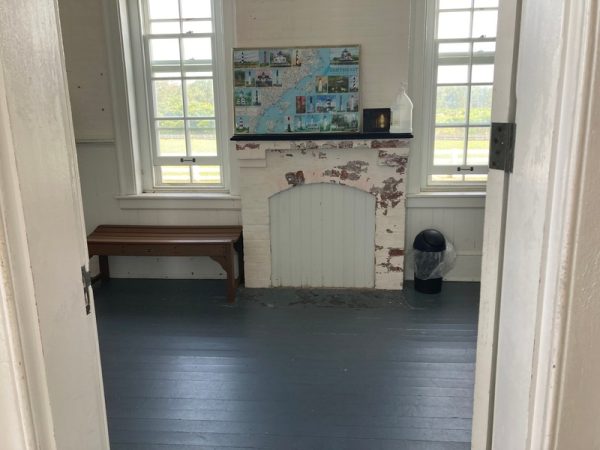
(NPS), would eventually attempt to open the lighthouse to the public for climbing tours. They would however, end up running into issues with the structural integrity of the structure. (NPS) would then go to congress to secure funding to fully restore the structures on the property. Funding would finally be awarded, and restoration would start in 2009.
One of the largest tasks to complete before restoration, would be to remove the large first order Fresnel Lens. Each set of prisms, would be removed from the frame, and placed into a large wooden crate. The crates would then be packaged up and lowered by pulley to the bottom floor of the lighthouse.
The crates would then be transported to the (NPS) Cape Hatteras National Seashore headquarters located in Manteo. There, They would be cleaned and repaired while awaiting re-instillation after the completion of the project.
A large scaffolding structure would then be erected around the whole exterior of the lighthouse structure. A white tarp-like wrap would then be put up around the top of the structure to protect the lantern room and protect the many workers completing repairs to the metalwork.
Work would finally begin, first on the cracked and damaged stair treads. (NPS) would work with a nearby foundry to create a mold to recast certain steps. After the mold was created, the treads would be sent to the foundry where the paint would be stripped from them. The foundry would then melt them down and pour them into the mold and allow them to set. They would then be sent back to (NPS) where they would be installed through the structure.
After the replacement of certain steps, work would begin to remove pain from the inside of the structure. Removing the paint would allow for the testing of air tightness in the lighthouse. Moisture testing using sensors would occur to keep the structure airtight.
At the same time, crews would start work on the exterior metal located near the lantern room. Severe cracking would be found requiring heavy repairs as well as a plan from an engineering team. Work would then halt due to the lack of sufficient funds to repair these components.
While waiting for the funds, the expensive scaffolding would be removed and crews would be sent home. The grounds surrounding the structure as well as the structure its self would then continue to be closed until a plan and funding was secured.
After securing funding from congress, crews, scaffolding, and work would start back up and progress would follow soon after. The metal components would be repaired along with masonry work, allowing crews to start repainting the structure.
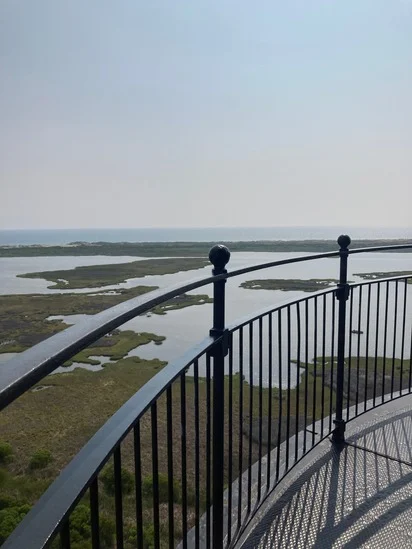
Finishing work would then be completed, including the replacement of windows, polishing of marble floors, and removal of scaffolding would occur. The Fresnel lens would also then be re installed into the lighthouse allowing it to be re lit and finally open to the public for public tours and climbing.
The climbs would continue and would gain popularity with visitors, and locals alike. Climbs would also continue through the pandemic and would be implemented through a new online public ticketing system.
In early 2025, the keepers quarters would officially catch fire. The structure would survive but would suffer major smoke and water damage. Restoration is currently underway to rebuild and restore the quarters. Plans for the quarters, include a new visitor center and gift shop. The Bodie Island Lighthouse continues to draw visitors both near and far who are history and lighthouse lovers alike.