
























Pop Culture Creates Our First Impression of Journalism:
Journalism isn’t just something individuals learn from the real news, it’s something most people learn first from TV shows, movies, and books.
Scholars in journalism studies explain that fictional depictions of journalists often shape people’s ideas about what journalists are like, sometimes more than actual reporting. According to research from the Image of the Journalist in Popular Culture Project at USC’s Annenberg School, these representations, whether heroic or unethical, influence public perception of journalism and its role in society.
These depictions span decades and include everything from ethically driven reporters to sensationalized “wild” media characters. That means many people develop ideas about objectivity, honesty, and bias before they engage with real news outlets, based purely on entertainment.
TV Characters Tell Us What Journalism Feels Like:
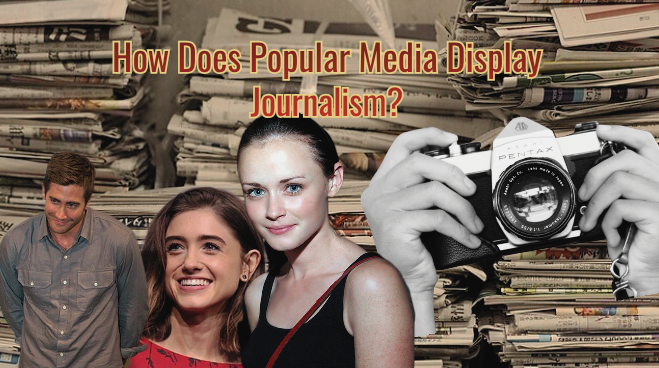
In shows like Gilmore Girls (2000), the character Rory Gilmore aspires to be a journalist. While the show never depicts her deeply engaging in the messy realities of investigative reporting, audiences still associate her ambitions with the profession.
This kind of portrayal matters because it frames journalism as a career that’s romantic, intellectual, or connected to personal identity rather than the complex and often difficult reality of finding and reporting facts responsibly. (You can even find fan discussions questioning how many real-world journalist qualities Rory actually displays.)
Another example of a show would be in Stranger Things (2016), Nancy Wheeler begins as a high school student but eventually pursues investigative journalism, especially in Season 3 when she interns at the Hawkins Post. Her storyline highlights gender bias in the newsroom, as her male coworkers dismiss her ideas and treat her more like an assistant than a reporter.
This portrayal shows audiences that journalism can involve persistence, courage, and the willingness to challenge authority, especially for young women entering the field. Nancy’s determination to follow leads despite being ignored reinforces the idea of journalists as truth-seekers who push back against corruption and disbelief. At the same time, the dramatized supernatural context exaggerates the stakes of investigative reporting, making journalism appear more action-driven and dangerous than it typically is.
Still, her character contributes to the broader cultural image of journalists as brave individuals willing to confront power and uncover hidden truths.
These portrayals can create mixed impressions, students of journalism might see the idealism, while others may see an unrealistic picture that glosses over how much hard work, interviewing, and verification the real job involves.
Movies Show the Grind and Ethics of Reporting:
Films that include journalism elements can also make a strong impact on how audiences view real news coverage. In Zodiac (2007), while the main character played by Jake Gyllenhaal is not a traditional reporter, his close involvement with newspaper staff conveys the intensity and ethical complexity of investigative work, and how personal obsession can intersect with public duty. While it isn’t a documentary, and dramatizes some events, it frames journalism as relentless and serious work.
Another example is Nightcrawler (2014), where Jake Gyllenhaal plays a freelance videographer who films crime scenes to sell to news stations. Critics have pointed out that Nightcrawler challenges audiences to think about sensationalism and the demand for shocking news coverage, essentially asking whether audiences themselves encourage unethical journalism by craving extreme or emotionally charged content.
These portrayals make journalism look intense, competitive, and sometimes morally grey, which affects public trust and expectations of real journalists.
Fictional Journalism Can Reinforce Biases and Stereotypes:
Many media portrayals don’t show everyday reporting like covering city council meetings or local school board decisions. Instead, they highlight drama, conflict, and high stakes scenes, which can reinforce stereotypes that journalists are either heroes who uncover corruption or scoundrels chasing sensational stories. Research suggests that popular images of journalists have changed little over time, with both positive and negative portrayals continuing to shape what people believe about the profession.
How journalism is portrayed in television and film isn’t just entertainment. Those portrayals act as one of the first ways people learn what the media should look like, what reporters should do, and how they should behave.
Whether it’s Rory Gilmore’s idealism, Jake Gyllenhaal’s intense on-screen characters, or the sensationalized newsroom antics in other shows and movies, these fictional representations shape public expectations and opinions about real journalism, for better or worse.
Katherine Miller • Feb 26, 2026 at 9:17 am
I really like this idea: “This kind of portrayal matters because it frames journalism as a career that’s romantic, intellectual, or connected to personal identity rather than the complex and often difficult reality of finding and reporting facts responsibly. “