











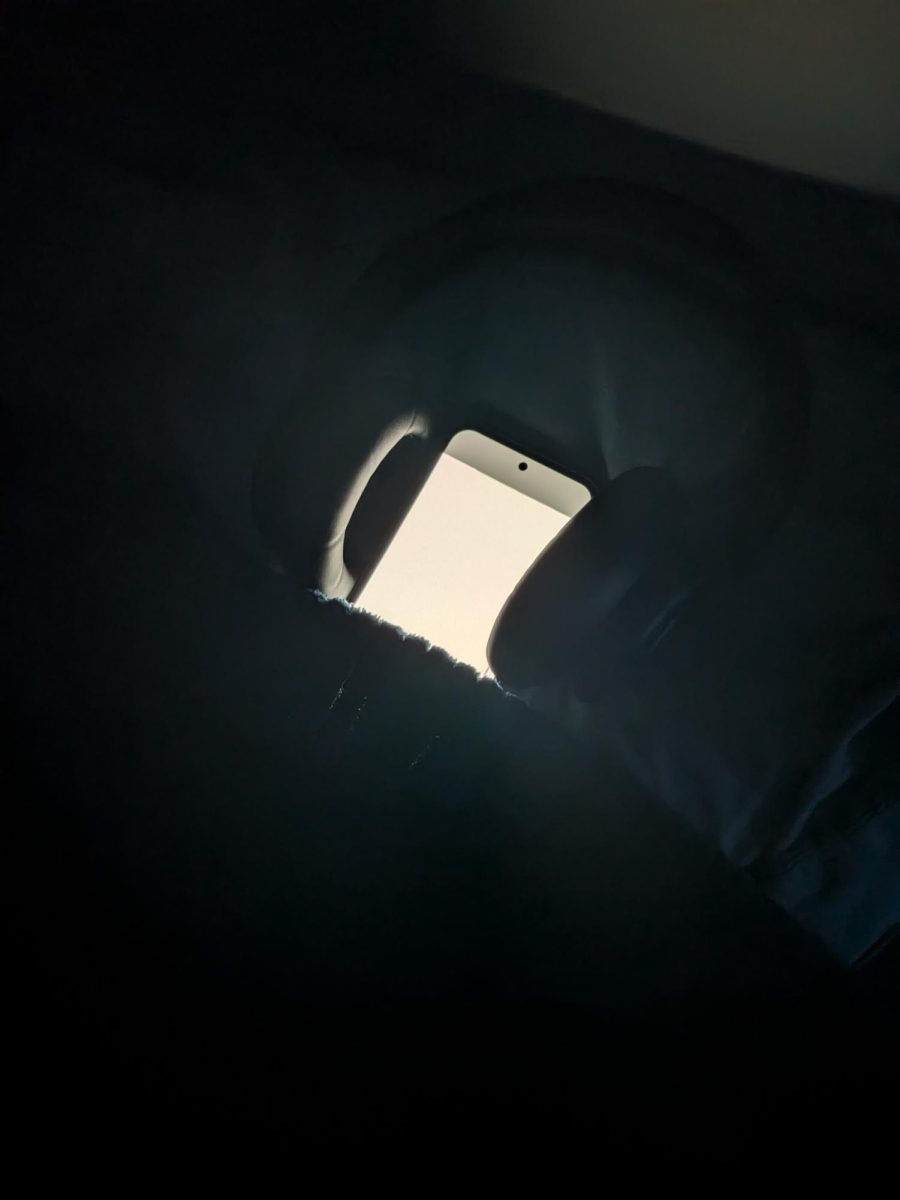








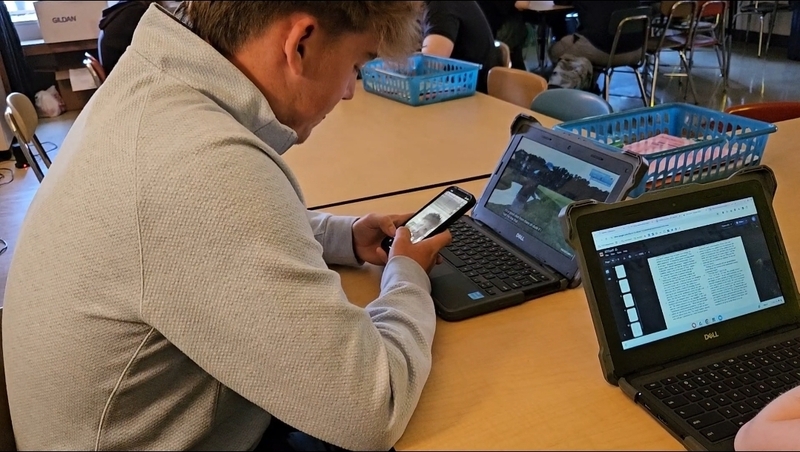





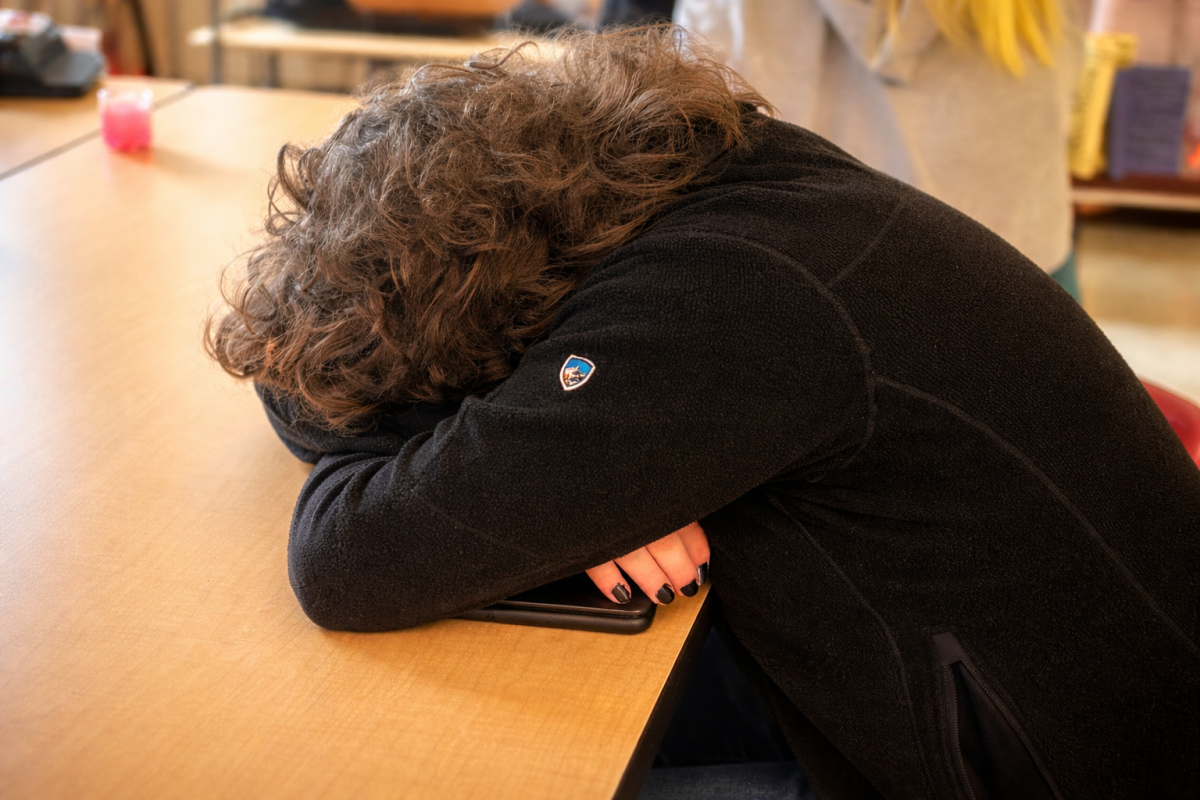
It’s late at night your homework is finally done, but your phone is right there on the nightstand. You think you deserve some time to scroll on TikTok.
You tell yourself just five more minutes… An hour later, it’s 1 a.m. and you still haven’t closed your eyes.
You have to be up in 4-5 hours for school. This is a normal night for most American teenagers and two forces are driving this sleep epidemic: cell phones and school start times that don’t match how the teenage body actually works.
Cell phones didn’t create the teen sleep crisis, but they’ve made it dramatically worse.
Social media apps are designed to keep users engaged for as long as possible, and for teenagers whose social lives run through their phones, putting it down at night feels almost impossible.
Alexis Nzyuko, Brunswick sophomore, says her phone is one of the main things keeping her up. She also points to something that not a lot of people talk about, late night is sometimes the only time that feels like her own.
“I like staying up at night since it’s when everyone else is asleep and I have no one to bother me,” Nzyuko said.
For these late hours at night are a time to relax and have peace.
School and just day-to-daylife cause a lot of stress especially for a teenage brain.
Picture this: you come home after school at 2:30 p.m. and your Mom has a list of chores for you to do.
Then you eat a quick snack and now it’s 4:00 p.m. and you have to head to practice.
After practice you get back home around 7:00 p.m. you need to eat dinner with your family.
Then you need to help them clean up and do homework by then it’s 10:00 p.m. and you need to get ready for bed.
By 10:30 p.m. you just want to lie in your bed and watch TikToks to decompress.
The problem is most teens get consumed by the phone and then it’s midnight and the cycle starts all over again.
This doesn’t even include a possible part time job schedule and workload. The more responsibilities the less time.
Tymire Speed, a Brunswick High School junior, tells a similar story.
Scrolling through social media and getting to talk with friends in the group chat are part of what keeps him up long past when he should be asleep. The cost shows up every morning.
“I am very angry, very grumpy when I wake up,” Speed said. “I’m not a morning person anyway, but having a bad night’s sleep and not being a morning person is a very bad mix.”
The blue light from phone screens suppresses melatonin, the hormone that tells your brain it’s time to sleep. Even after teenagers put the phone down, the brain can take up to an hour to wind down. This is why scientists recommend all people, not just teenagers, get off screens an hour before they go to sleep.
But phones are only half the problem.
During adolescence, the body’s internal clock naturally shifts toward staying up later and waking up later; it’s humans’ natural biology, not laziness. Researchers have compared early school start times for teens to forcing an adult to be functional at 4 a.m. every day.
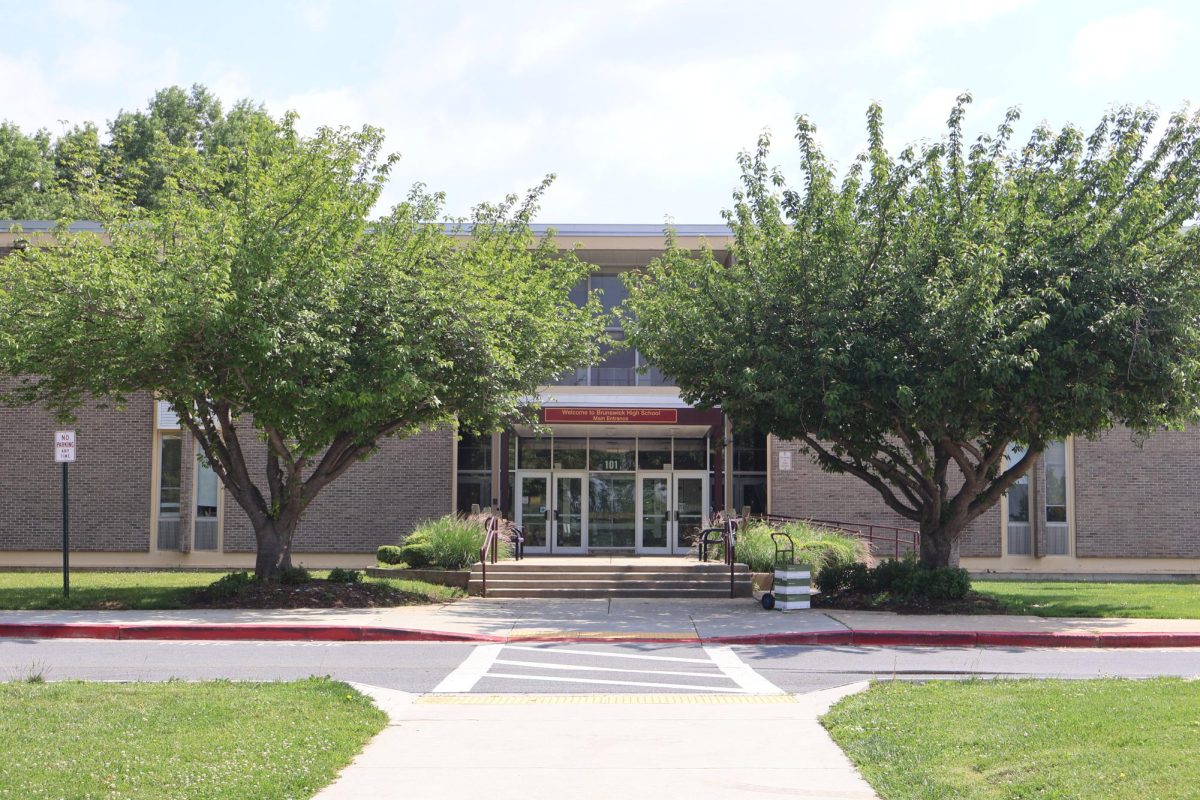
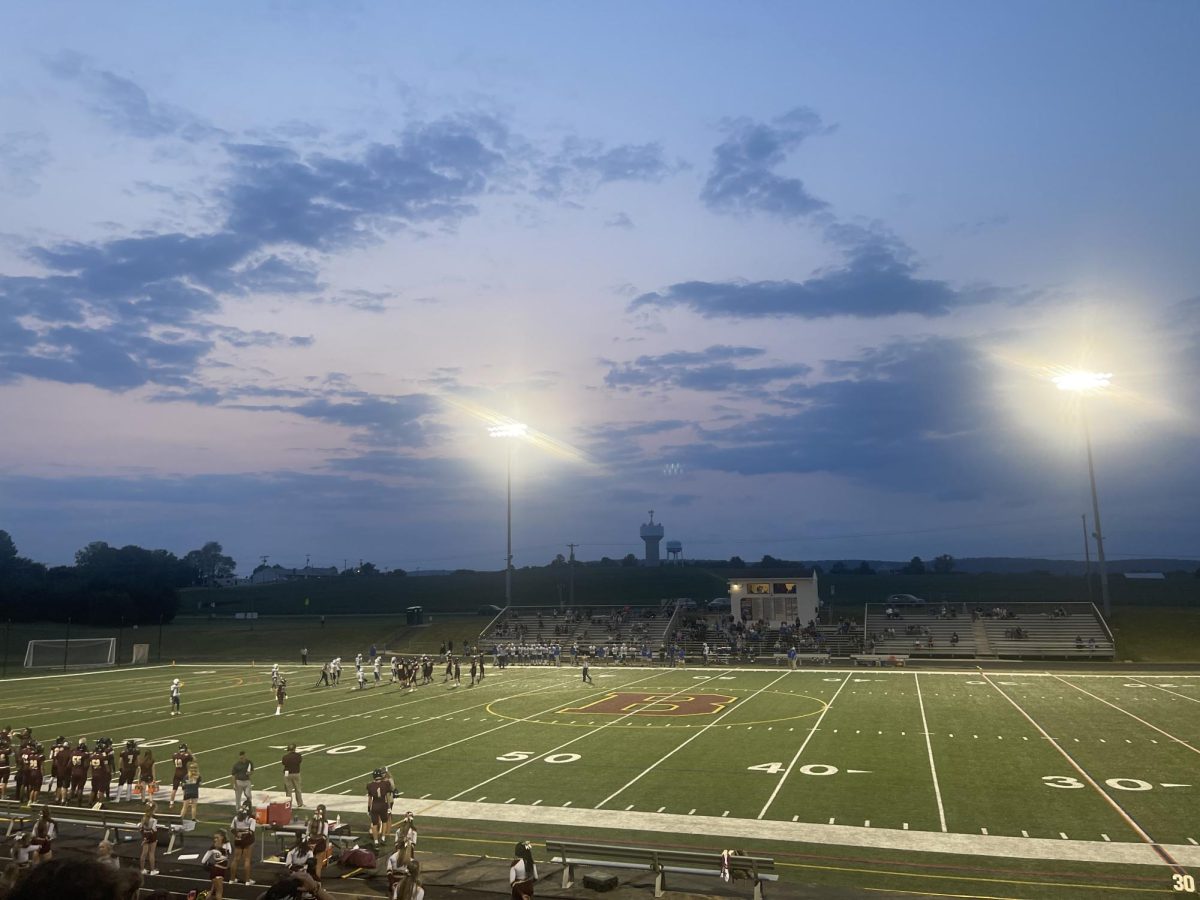
At Brunswick High School (BHS), the school day starts at 7:30 a.m. and ends at 2:15 p.m., meaning many students are out of bed before 6 a.m. just to get there on time.
The Centers for Disease Control and Prevention (CDC) reports that roughly 87% of U.S. high school students aren’t getting the recommended 8 to 10 hours of sleep on school nights. And how could you if you have to get up at 5 a.m.? You would have to go to bed by 9 p.m. just to get 8 hours of sleep. That is very difficult for anybody, not just teens.
Both Speed and Nzyuko mentioned homework pushing their nights even later, which makes that early alarm even more brutal.
“I’m always tired,” Nzyuko said.
She’s run on little sleep so consistently that she’s almost gotten used to it—almost.
The American Academy of Pediatrics recommends schools not start before 8:30 a.m. Studies show that even a 30-minute delay leads to better attendance, better moods, and stronger academic performance. This shows that the school system and students both need to make changes to be successful.
Students need to stop being on their phones way past their own bed time and schools need to adapt and start later. If school started later and students got off their phones prior to bedtime, most would see an improvement in grades, in behavior, but most importantly growth.
A young body and mind develops while it sleeps and school and devices are preventing teens to grow and develop into the best versions of themselves.