






































Think about your daily screen time, what do you spend your time on the most? Is it scrolling through videos, checking messages, or watching content online? In today’s digital world, social media is no longer just a teenage habit, it’s become a daily routine for people of all ages.
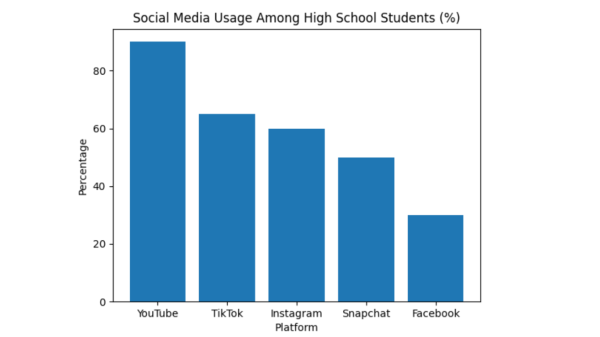
A recent survey data collected from 50 participants highlights how widespread social media use has become.
Platforms like YouTube, TikTok, and Instagram dominate across younger users, while Facebook and YouTube remain popular among older adults. According to the data (Graph 1), YouTube was the most used platform overall, with 90% of participants reporting regular use. TikTok and Instagram followed closely, showing that fast-paced, video-based content continues to attract users across multiple age groups.
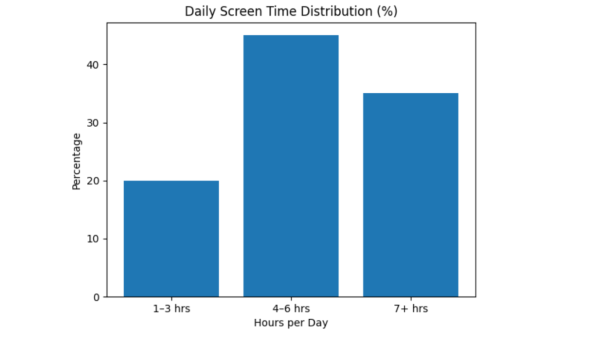
Screen time results were equally revealing. As shown in Graph 2, only 20% of participants reported spending between one and three hours per day on screens. Meanwhile, 45% spent four to six hours, and 35% reported more than seven hours daily. These numbers suggest that high screen time is not limited to teens, but is a growing pattern across all generations.
Interviews conducted alongside the survey provide a more personal look into these habits.
“I use social media mostly to relax after work,” said a 34-year-old participant. “But sometimes I don’t realize how much time has passed.”
A high school student shared a similar experience in the survey:
“I go on my phone for a little, and then suddenly it’s been hours. It’s kind of addictive.”
Even older users reported increased use in the data collected in the survey.
“I mainly use Facebook to stay in touch with family,” said a 62-year-old participant. “It helps me feel connected, especially with relatives who live far away.”
These experiences reflect both the benefits and challenges of social media. On the positive side, it allows people to stay connected, informed, and entertained. Many users rely on these platforms to communicate with friends and family, discover new ideas, and express themselves creatively.
However, research also shows that too much screen time can have negative effects. High usage has been linked to poor sleep, increased stress, and reduced physical activity. Some users also report feeling overwhelmed or distracted due to constant notifications and content. These effects can impact people differently depending on their age, but no group is completely unaffected.
Health professionals suggest that moderation is key. Setting time limits, taking breaks, and spending time offline can help reduce the negative effects of excessive screen use. Being aware of how often social media is used and why it can also help people build healthier habits.
As technology continues to evolve, social media remains a powerful part of everyday life. From teenagers to working adults to older generations, people everywhere are spending more time online. The question is no longer who uses social media the most, but how it is shaping the way everyone lives.